
Music Learning – Know That and Know How
Gopalakrishnan, Founder – Yadot Music Technologies
Background
In the context of instrumental music, Know-That (Declarative Knowledge) is the understanding of music theory. Know-How (Procedural Knowledge) is skill based, instrument playing technique.
Overview
In music, the relationship between Know-That and Know-How is often described as a “virtuous cycle.” While they are distinct, they are rarely truly orthogonal in a high-level performer. Both are believed to be essential, and one cannot be traded off for the other. It is also widely believed that Know-That precedes Know-How.
Refer a detailed explanation at https://philarchive.org/archive/SMIKHV.
The Question
Are these 2 aspects orthogonal, and under what conditions?
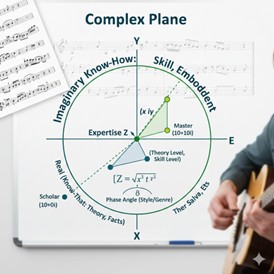
A Theory
Assume for now that we are looking at instrumental music learning beginners.
I believe that in an “acquisition” phase (such as with beginners), these 2 aspects can be considered orthogonal (in the sense that you can have one without the other). As in each of these can be learnt independently, although they need to come together well later.
Few examples that come to mind:
- The “Ear” Player: Can play complex solos intuitively (Know-How) but cannot explain the scales or intervals they are using (No Know-That).
- The Scholar: Knows everything about music theory (Know-That) but cannot play a simple melody (No Know-How).
We see the above examples regularly, so, I am thinking that for the large part, it reinforces my belief in orthogonality, at least for early learners.
So, one may ask – why is this important?
Let’s look at the next few sections.
A Mathematical Exploration
Assuming orthogonality, below is an exploration of these 2 concepts using the familiar mathematical prism of real and complex variables.
Suppose for now that Know-That is the variable D (for Declarative), and Know-How is the variable P (for Procedural).
Total expertise can be described as
T = D + jP (j being the complex number which is square-root of -1)
D is the “real” value (often referred as X in math equations) and P is the “imaginary” value (generally referred as Y in math).
Explaining Know-That and Know-How through the lens of Real (D) and Imaginary (P) variables is a powerful way to visualize their “orthogonality”. In mathematics, real and imaginary axes are perpendicular; movement along one does not inherently cause movement along the other.
A few examples below:
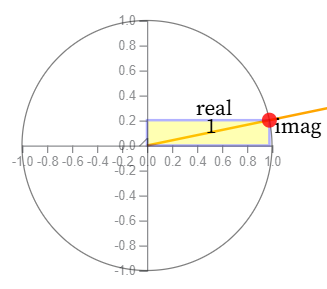
Figure 1: Example 1- Strong Know-That and Limited Know-How
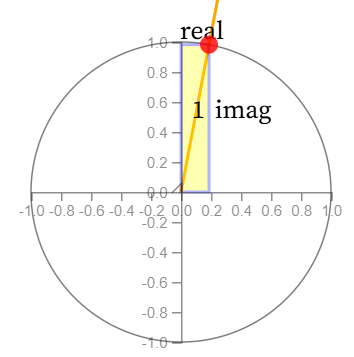
Figure 2: Example 2- Weak Know-That and Strong Know-How
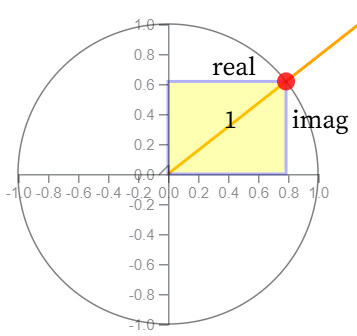
Figure 3: A Balanced Learner – Progressing well on Know-That and Know-How
Why may this be useful?
The concept of continuous improvement becomes easy to explain using circles.
Assume the beginner starts at origin, and then progress is determined by both variables. To truly grow in expertise, each variable needs to grow, to allow the other to grow, as shown below.

Figure 4: Continuous improvement explained in expanding circles
Conclusion
This approach allows an alternate way to understand why certain learners progress faster, while some appear stuck for longer times.
Finally, it is important to assess progress holistically on both dimensions to judge whether beginner is truly aligned in the direction of progress.
Continuous tracking on both dimensions allows targeted training approach to fine-tune each learner’s progress.

0 Comments